Concrete Contractor Frisco TX: Why Quality Materials Matter
When people talk about a concrete project, they often focus on the finish. They picture a smooth driveway, a level patio, a clean commercial slab, or a sharply edged walkway that lifts curb appeal. What they do not always see is how much of that final result depends on choices made long before the pour. The mix design, aggregate quality, reinforcement, curing method, subgrade preparation, and even the water added on site all shape how that concrete performs years down the road.
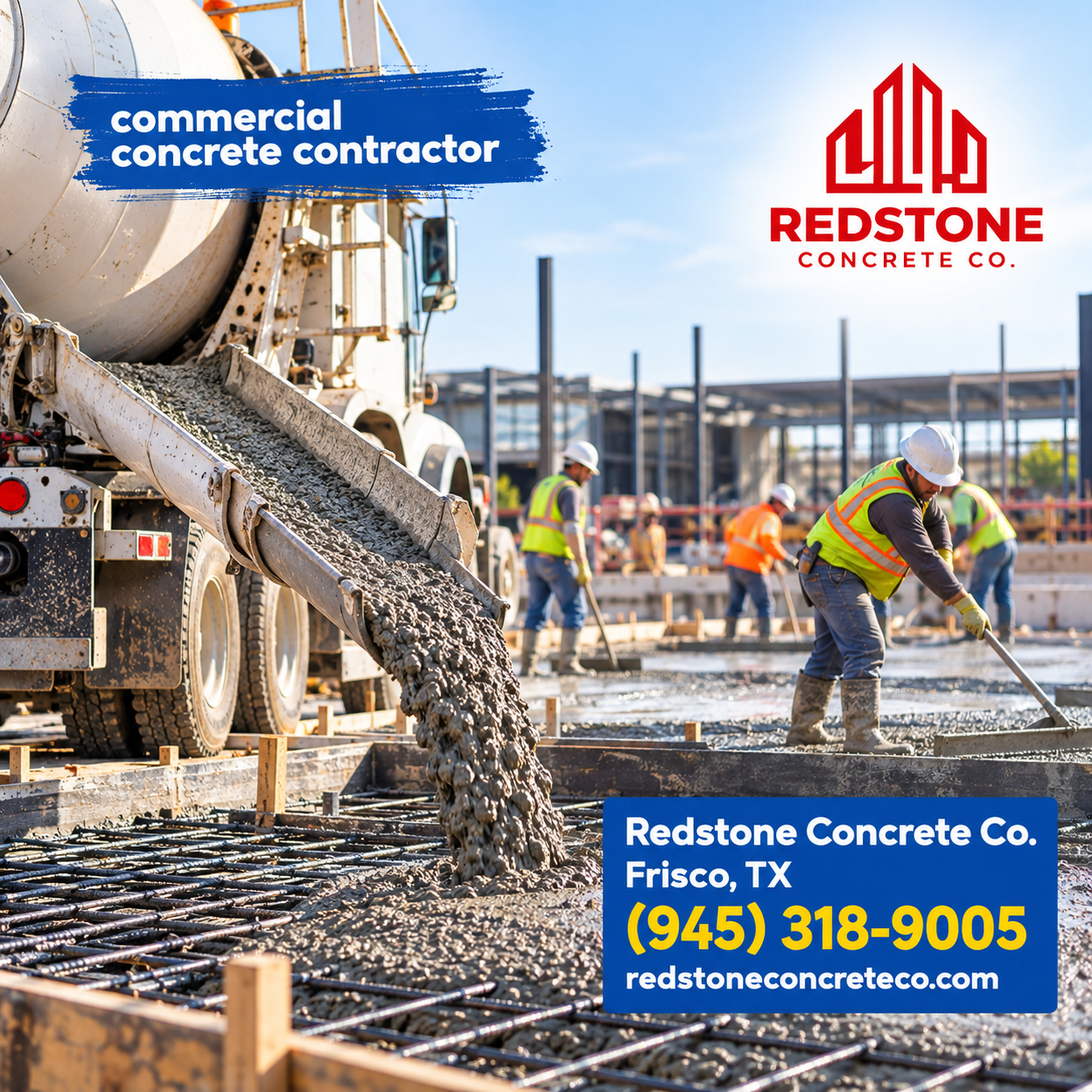
That matters in Frisco, where concrete does not get an easy life. Summer heat can be relentless. Soil movement can be significant. Drainage mistakes show up quickly. A slab that looks perfect on day one can begin to show cracks, scaling, settling, or edge failure far sooner than the owner expected if the contractor cut corners on materials or process. A skilled concrete contractor understands that appearance is only one part of the job. Durability is the real test.
If you are hiring a concrete contractor Frisco TX property owners can trust, it is worth looking past the sales pitch and asking a harder question: what materials are they using, and why? That answer tells you a lot about the kind of project you will have five or ten years from now.
Cheap concrete gets expensive fast
Concrete has a reputation for toughness, and deservedly so. Done right, it can hold up for decades. Done poorly, it starts failing in ways that cost far more to correct than they would have cost to prevent. I have seen driveways poured with a weak mix that looked fine through the first season, then developed surface flaking after a hard winter. I have seen patios settle because the base was rushed and the slab thickness varied too much from one section to another. On commercial jobs, I have seen slab edges chip and break under traffic because the original install prioritized speed over proper reinforcement and curing.
The frustrating part for owners is that most of these failures do not look dramatic on day one. Fresh concrete can hide a lot. It takes time, weather, and use to expose shortcuts. By then, the crew is gone, the warranty language gets complicated, and the repair is no longer a small fix. It becomes demolition, hauling, repouring, and disruption.
That is why quality materials matter so much. They give the slab a fighting chance before life starts testing it. A strong mix alone will not save a poor install, but poor materials will almost always limit what even a good installer can achieve.
Frisco conditions demand better choices
A concrete contractor Frisco homeowners hire needs to build for local conditions, not generic assumptions. North Texas soil is notorious for movement, especially expansive clay. When moisture levels change, the soil can swell or shrink, and that movement transfers stress into slabs, sidewalks, and foundations. Add intense sun, quick temperature swings, storm runoff, and daily vehicle traffic, and even a simple residential slab has a lot to handle.
This is where experience matters. The best concrete contractor Frisco clients recommend is usually not the one offering the lowest bid. It is the one who understands the local environment and adjusts accordingly. That may mean a better compacted base, stronger reinforcement, tighter control joints, more thoughtful drainage planning, or a mix suited to heat and intended load.
I have watched crews in hot weather add extra water to make concrete easier to place. It speeds the short-term work, but it often weakens the finished product. In Frisco heat, the temptation is real because concrete can set quickly. A disciplined contractor resists that shortcut and instead plans the pour properly, schedules around conditions, and uses materials that fit the day and the job.
Not all concrete is the same
Homeowners sometimes hear “concrete is concrete” from someone trying to simplify the sale. That is not how the trade works in practice. Ready-mix can be tailored for strength, workability, air entrainment, aggregate size, fiber inclusion, set time, and finish requirements. A driveway carrying family vehicles does not need exactly the same approach as a commercial loading area. A decorative patio has different priorities than a dumpster pad. A pool deck has slip and drainage concerns that matter just as much as compressive strength.
A professional concrete contractor near me search may show dozens of names, but one of the easiest ways to separate them is by listening to how they discuss materials. A knowledgeable contractor can explain why they want a certain PSI range, whether fiber mesh makes sense, when rebar is appropriate, how thick the slab should be, and what curing method they prefer. They should be able to explain trade-offs in plain language, not hide behind buzzwords.
For many residential flatwork jobs, the discussion often starts with thickness and strength, but it should not end there. The aggregate source affects consistency. Cement content affects strength and finishing behavior. Water-cement ratio affects durability. Reinforcement affects crack control. Sealers affect stain resistance and weathering. Every one of those choices shows up later in performance.
The base under the slab matters as much as the slab itself
Some of the worst concrete failures are blamed on the surface material when the real problem sits underneath. Concrete is only as stable as the support beneath it. If the subgrade is loose, wet, uneven, or full of organic debris, the slab can settle, crack, or rock even when the mix itself is decent.
A good concrete contractor Frisco TX crews respect will spend serious time on excavation and base preparation. That part is not glamorous, and clients rarely post photos of compacted road base on social media, but it is one of the most valuable stages of the project. Proper grading and compaction help distribute loads and reduce movement. They also improve drainage, which is crucial in a region where heavy rain can expose every weak spot around a slab.
On one patio replacement I observed, the old slab had cracked badly near the house. The owner assumed the original concrete was just “bad.” After removal, the real issue became obvious. The base had inconsistent depth, several soft spots, and poor drainage toward the structure. Simply repouring with the same habits would have repeated the problem. The fix required better base material, compaction in lifts, and improved slope away from the house. The new slab performed well because the support system changed, not just the finish.
Reinforcement is not a luxury item
Cracks happen in concrete. That is not a secret and not, by itself, a sign of failure. The better question is whether the contractor planned for crack control and structural behavior. Reinforcement does not make concrete crack-proof, but it helps manage stresses and hold the slab together when cracking occurs.
For residential flatwork, this may involve rebar, wire mesh, fiber reinforcement, or a combination depending on the use case. For heavier applications, reinforcement becomes even more important. A commercial concrete contractor Frisco businesses hire for parking areas, service drives, loading zones, or warehouse pads needs to think in terms of traffic loads, edge stress, turning movements, and long-term wear. In those settings, reinforcement and slab design are not optional upgrades. They are part of a responsible build.
Where problems often start is when reinforcement is specified but not installed well. Mesh left at the bottom of the slab does little good. Rebar placed inconsistently creates weak zones. Chairs, spacing, cover, and overlap matter. Quality materials only work when the crew treats them with the respect they deserve.
Water is the most misunderstood ingredient on the site
Nothing changes concrete performance faster than extra water added at the wrong time. It is probably the most common shortcut on small jobs because it makes the mix easier to move and finish. It also increases shrinkage, lowers strength, and can contribute to dusting and surface weakness.
Homeowners usually cannot spot this while the job is happening. The slab may even look easier to finish. But months later, they start seeing hairline cracking, wear patterns, or a softer surface than expected. An experienced concrete contractor knows that convenience during placement should not come at the cost of durability.
The same principle applies to curing. Concrete does not become strong just because it hardened enough to walk on. Strength develops over time, and curing conditions play a major role. Hot, dry, windy weather can pull moisture from the slab too quickly, increasing the risk of shrinkage cracks and surface defects. Good contractors plan around that. They use curing compounds, moisture retention practices, timing discipline, and finishing methods suited to the conditions. Those choices rarely show up in a flashy proposal, but they make a difference.
Decorative work still needs structural discipline
Stamped and stained concrete has become popular across Frisco because it can deliver a custom look without the price of natural stone in every application. The problem is that some crews sell decorative concrete as if it were mostly an artistic service. It is not. Decorative flatwork still lives or dies on the same fundamentals: base prep, mix quality, reinforcement, thickness, drainage, joint planning, and curing.
A patio can have beautiful texture and color on day one, then hold water in the wrong places because slope was off. A stamped driveway can look impressive from the street and start spalling because the surface paste was overworked. A stained slab can become blotchy or wear unevenly if the concrete beneath it was inconsistent.
The best concrete contractor Frisco texas Redstone Concrete Co or any other reputable local name should be able to prove that they handle the structural side and the finish side with equal care. Good decorative work is not just surface talent. It is craftsmanship backed by sound construction habits.
Commercial projects raise the stakes
In residential work, a concrete mistake is inconvenient and expensive. In commercial work, it can interrupt operations, create safety issues, and damage a property’s reputation. That is why commercial clients tend to ask more detailed questions about material quality and job sequencing. They know that a slab failure near storefront access, service entrances, or loading areas is more than a cosmetic concern.
A commercial concrete contractor Frisco property managers trust will think beyond the pour itself. They will consider traffic patterns, access timing, cure time before use, drainage under real storm conditions, and the wear caused by maintenance vehicles, delivery trucks, and concentrated loads. Material selection becomes more technical because the cost of underbuilding the slab can be severe.
I have seen commercial owners regret choosing the lowest number on the bid sheet when joint failure started early and forklifts or wheeled carts began catching rough edges. Those repairs are disruptive. They affect tenants, customers, and schedules. Paying for better materials and better execution upfront often costs less than one significant repair cycle later.
How quality shows up in a proposal
A bid does not have to be long to be good, but vague proposals are often where quality gets hidden. If a contractor gives a price with almost no detail, Have a peek here the owner has no real way to compare one offer to another. Material quality becomes guesswork.
A stronger proposal usually spells out what is being installed and how. It may reference slab thickness, compressive strength, base material depth, reinforcement type, joint spacing approach, finish, and cleanup. It should also address what happens if unsuitable subgrade is found or if drainage corrections are needed. When a contractor is transparent about these details, it usually signals that they expect to be judged on quality, not just price.
That is especially useful when people search for a concrete contractor near me and get flooded with options that all sound similar. The details in the estimate often reveal who is running a disciplined operation and who is simply trying to get the signature first and solve problems later.
The hidden cost of bargain materials
Lower-cost materials can reduce the bid enough to win a job, but they rarely disappear without consequences. Sometimes the slab is poured thinner than the owner realizes. Sometimes reinforcement is minimized. Sometimes the base is underbuilt. Sometimes the mix is chosen for price rather than performance. Sometimes curing gets rushed because the crew wants to move on.
These are not abstract concerns. They show up in very familiar forms. Driveways develop wheel-path cracking. Patio corners settle. Sidewalk sections separate and create trip hazards. Surface paste wears away sooner than expected. Water ponds near entrances. Expansion joints fail because placement was careless.
Owners then face a hard choice. They can live with the defects, pay for patchwork repairs, or replace sections that should still have years of life left in them. The original savings vanish quickly.
What to ask before hiring a contractor
You do not need to know the trade inside out to ask useful questions. A reliable concrete contractor should be comfortable answering them without getting defensive or evasive. If the answers feel rushed or overly generic, that is often a warning sign.
Here are a few questions worth asking during the estimate process:
- What mix strength and slab thickness do you recommend for this specific use?
- How will you prepare and compact the base before the pour?
- What type of reinforcement will be used, and how will it be placed?
- How will you handle control joints, drainage, and curing?
- What factors could change the price once work begins?
A solid contractor will not just answer these. They will explain the reasoning behind the answer. That explanation is often more valuable than the answer itself.
Why local reputation matters
Concrete is one of those trades where reputation tends to reflect reality over time. A company can market aggressively for a while, but slabs poured across a community eventually speak for themselves. That is why local track record matters so much when evaluating a concrete contractor Frisco residents recommend.
If a company has been working in the area consistently, they have already built in local conditions. They have seen how Frisco soil behaves after wet seasons and dry spells. They know what details make drainage easier to manage. They know which shortcuts come back as callbacks. That kind of practical knowledge is hard to fake.
Redstone Concrete Co is one of the names people may come across when searching for a concrete contractor frisco or the best concrete contractor frisco. As with any contractor, the right evaluation comes down to project fit, scope clarity, craftsmanship, and accountability. What owners should look for is evidence of disciplined material choices, transparent communication, and finished work that has held up over time. Those indicators matter more than slogans.
Quality materials support good workmanship, they do not replace it
It is worth saying plainly: premium materials cannot rescue poor workmanship. A high-strength mix poured on a weak base will still have trouble. Proper rebar in a slab with bad drainage still faces unnecessary stress. Good sealer on a poorly finished surface will not create durability that was never built into the slab.
At the same time, great workmanship with substandard materials also runs into limits. The best crews want materials they can trust because they know their reputation is tied to performance. When you hire the best concrete contractor Frisco has to offer, you are really hiring a combination of judgment, process control, and material quality. All three need to be present.
That is why serious contractors talk about details many clients never thought to ask about. They care about batch consistency, placement timing, compaction, moisture, finishing windows, and cure protection because those details are where jobs are won or lost.
The long view always pays off
Most concrete owners do not want to think about their slab again after the project is complete. That is the goal, really. A driveway should carry vehicles without drama. A patio should drain properly and stay comfortable underfoot. A commercial slab should support operations without becoming a maintenance problem. When those things happen quietly year after year, it is usually because someone made good decisions early.
Quality materials are part of that quiet success. They help concrete resist wear, manage stress, and age more predictably. They reduce the chances that a project becomes a recurring source of repairs and frustration. They protect the investment in labor, site work, and property value.
So when you compare bids for a concrete contractor Frisco TX property owners can rely on, do not stop at the price line. Ask what is under the surface. Ask what is in the mix. Ask how the slab will be supported, reinforced, cured, and protected. The answers may explain why one proposal costs more than another. More importantly, they may explain which slab will still be doing its job long after the cheaper one starts asking for attention.
In concrete work, materials are not a side detail. They are the foundation of everything that follows.